
Understanding Ground Movement and Your California Home
For most California homeowners, the ground beneath our feet is a constant topic of conversation. We talk about earthquakes, landslides, and mudslides. We worry about fires, sure, but the earth itself, that’s a different kind of anxiety. And sometimes, quietly, in the back of your mind, you might wonder about something even stranger: sinkholes.
It’s a scary thought, isn’t it? One day your backyard is there, the next it’s a gaping maw, swallowing everything in sight. You see those dramatic videos from Florida or Kentucky, and it makes you pause. But here in California, do we really need to worry about sinkholes? And if one *did* appear, would your homeowners insurance policy even help?
The short answer is yes, we *do* have sinkholes, though they’re often different from what you might picture. The real answer about coverage, however, is far more complicated than a simple “yes” or “no.”
What Exactly Are We Talking About When We Say “Sinkhole”?
When most people picture a sinkhole, they imagine a sudden, dramatic collapse of the ground, often into an underground cavern. That’s certainly one type, called a “cover-collapse” sinkhole. These usually happen where there’s soluble bedrock — like limestone, gypsum, or dolomite — underneath a layer of clay, sand, or soil. When groundwater dissolves the bedrock, it creates voids. Eventually, the overlying material can’t support itself, and *boom*, it collapses.
But here in California, our geology is a bit different. We have some areas with soluble rocks, particularly in the desert regions or where ancient marine deposits exist. More often, though, what we experience as “sinkhole-like” events are related to different issues. Think about poorly compacted fill dirt, old or leaky pipes eroding soil, or even intense rainfall washing away subsurface material. These can create localized depressions or collapses that look and feel very much like a sinkhole to a homeowner, even if the geological process is slightly different.
For insurance purposes, the distinction can be huge.
California’s Shifting Sands – And Clay, And Rock
Our state is famous for its seismic activity. We sit on major fault lines, and the constant grinding of tectonic plates means earth movement is just a part of life here. From the San Andreas Fault running through the Carrizo Plain to smaller, active faults crisscrossing the Inland Empire and Ventura County, the ground is always doing *something*.
But it’s not just earthquakes. California also has vast areas of expansive clay soils, especially in places like the Central Valley and parts of Southern California. These soils swell when wet and shrink when dry, causing stress on foundations and sometimes leading to ground subsidence. Then there are our hillsides, prone to landslides, especially after heavy rains — remember the mudslides in Montecito or the recent events in the Santa Cruz Mountains?
Which brings up something most people miss. All these forms of ground movement — earthquakes, landslides, mudslides, even expansive soils — are generally *excluded* from standard homeowners insurance policies. And that’s usually where sinkholes get lumped in too.
Does My Standard HO-3 Policy Cover Sinkholes? (Probably Not)
Let’s get straight to it. Most standard HO-3 homeowners insurance policies in California do *not* cover damage caused by sinkholes. Why? Because sinkholes are typically considered a form of “earth movement,” and earth movement is a pretty universal exclusion in these policies.
Think about it this way: insurers design their policies to cover sudden, accidental perils like fire, theft, or a burst pipe. They’re not generally set up to cover damage from natural, geological processes that happen over time or are linked to the very ground the house sits on. If they did, premiums in a place like California would be astronomical for everyone, because the risk of some kind of earth movement is so high.
So, if your house shifts because of a slow slide, or if expansive clay soil cracks your foundation, or if a true sinkhole opens up under your driveway, your base policy likely won’t pay for the repairs. That’s a tough pill to swallow, especially when you’re already paying a pretty penny for insurance in California.
But Wait — What About “Catastrophic Ground Collapse”?
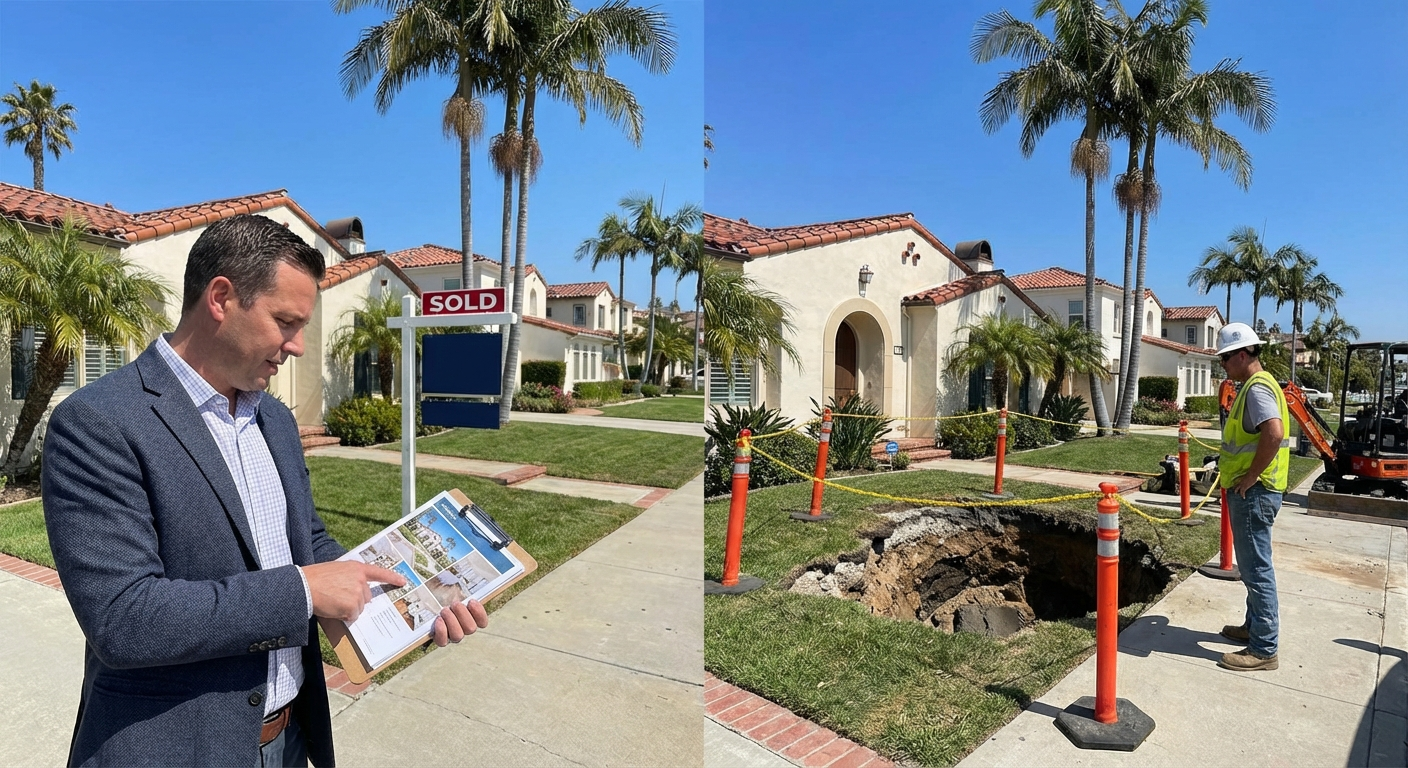
Now, here’s where it gets interesting, and a little confusing. Some insurance policies, or state regulations in certain places, *do* make an exception for something called “catastrophic ground collapse.” This term is often very narrowly defined. It usually means a sudden, drastic collapse of the ground into a subsurface cavity, specifically caused by the dissolution of limestone or other soluble rock.
It’s a very specific kind of sinkhole, and it has to cause actual structural damage to the insured building. It’s not just a depression in your lawn. It’s a genuine, dramatic event.
Does California law mandate this coverage? Not like Florida does, for instance. In Florida, if you have property insurance, you *must* be offered catastrophic ground collapse coverage. That’s not the case here. So, while some policies *might* include a very specific, limited version of this, it’s not something you should count on without checking your policy’s fine print. And honestly, it’s pretty rare to find it automatically included or broadly defined in California.
Getting Real Coverage: Endorsements Are Your Friend
If you’re genuinely concerned about sinkholes or other forms of earth movement, you’ll almost certainly need to buy extra coverage, known as an endorsement or rider. These are add-ons that you purchase to expand the scope of your policy.
For earth movement, you might find endorsements that cover:
* **Earthquake Damage:** This is the most common add-on in California. It’s usually a separate policy or a significant endorsement. It covers damage from tremors, but typically not from other ground movement.
* **Landslide/Mudslide Coverage:** Less common, but sometimes available, especially for properties in high-risk areas. This can be tough to get and expensive.
* **Specific “Sinkhole” Coverage:** This is much rarer in California than in places like Florida. When it *is* available, it might be tied into a broader “earth movement” endorsement, or it might be a very specific, limited type of sinkhole defined by the insurer. It usually comes with its own deductible, which can be quite high.
How much does this cost? It varies wildly. Your location, the age of your home, your deductible, and the specific insurer all play a role. It will certainly add to your premium, and it might not be offered by all insurers, especially if your home is in a perceived high-risk zone for ground instability. Premiums for some types of extended earth movement coverage have jumped quite a bit in recent years, reflecting the increased risk in our state.
Why Insurers Are So Cautious About Ground Movement
It’s not that insurers are trying to be difficult; it’s about risk assessment. California is a high-risk state for natural disasters. The sheer scale of potential damage from a major earthquake, or widespread landslides after an atmospheric river event, is staggering. Insurers have to balance the payouts they might make against the premiums they collect.
When you think about the potential for a sinkhole to damage a home, it’s often not just the house itself. It’s the utility lines, the driveway, the landscaping, and the potential for ongoing instability. The cost of remediation can be astronomical.
This caution is why some major carriers, like State Farm and Farmers, have been pulling back from offering new policies or increasing rates significantly across California. Even the California FAIR Plan, our “insurer of last resort,” primarily offers basic fire coverage and doesn’t typically extend to earth movement or sinkholes.
What Can You Do to Protect Your Home?
First, read your current homeowners policy. Get out that thick document and look specifically for the “Exclusions” section. Search for “earth movement,” “subsidence,” “landslide,” and “sinkhole.” You might be surprised by what you find – or don’t find.
Next, consider your property’s specific risks. Are you on a hillside? Is there known expansive soil in your area? Have there been reports of localized ground issues nearby? A geological survey might be overkill for most, but if you’re truly worried, it could offer peace of mind.
Then, talk to an expert. This is where Karl Susman and the California Home Insurance Agency come in. Karl has been helping Californians understand their insurance for years, and he knows the unique challenges of our state’s geology and insurance market. He can walk you through your current policy, explain the exclusions, and discuss any potential endorsements that might be available for your specific situation.
Understanding your risks and your coverage options is the first step toward protecting your most valuable asset. Don’t wait until the ground starts to move to figure out if you’re covered.
Ready to get a clearer picture of your home’s protection? Get a quote today and talk to a knowledgeable agent about your California homeowners insurance needs.
Frequently Asked Questions About Sinkhole Coverage in California
Q: Are sinkholes common in California?
A: While California does experience ground collapses, they’re generally less frequent and often differ geologically from the dramatic limestone-dissolution sinkholes seen in places like Florida. Our ground issues often relate to seismic activity, expansive soils, or erosion from water main breaks rather than deep geological caverns.
Q: If my home is damaged by a sinkhole, what’s my first step?
A: Your absolute first step is to ensure everyone’s safety and evacuate if necessary. Once safe, document the damage with photos and videos. Then, contact your insurance agent immediately to report the damage and understand your policy’s specifics.
Q: Can I get earthquake insurance that also covers sinkholes?
A: Not typically. Earthquake insurance is a separate policy or endorsement specifically for damage caused by seismic activity. Sinkholes and other forms of “earth movement” are generally excluded from both standard homeowners and earthquake policies. You’d usually need a separate, specialized endorsement for specific sinkhole or broader earth movement coverage, if available.
Q: Why is it so hard to get coverage for ground movement in California?
A: California’s geological makeup, with active fault lines, varied soil types, and a history of landslides and mudslides, presents a very high risk for insurers. Covering all forms of earth movement would make policies prohibitively expensive for most homeowners. Insurers manage this risk by excluding these perils from standard policies, offering them as separate, often costly, endorsements.
Protecting your California home means understanding all the risks, even the ones that seem far-fetched. If you have questions about sinkhole coverage or any other aspect of your homeowners insurance, don’t hesitate to reach out. Karl Susman and the team at California Home Insurance Agency (CA License #OB75129) are here to help you make sense of it all. Give us a call at (877) 411-5200 or click here to get a quote and start a conversation about protecting your home.
This article is for informational purposes only and does not constitute financial advice.