The Shifting Sands Beneath Your California Home
For most California homeowners, the ground beneath their feet feels pretty solid. But here’s the thing: it’s not always. Our state, with its active geology, varied soil types, and extreme weather swings, presents a unique challenge for home foundations. You’ve got everything from expansive clay soils in the Inland Empire that swell when wet and shrink when dry, to homes perched on hillsides in Malibu or the Oakland Hills, constantly battling erosion. Then there are the seismic zones — almost everywhere, really — and the ever-present threat of a good shake.
All this movement, whether slow or sudden, can wreak havoc on your home’s foundation. Cracks appear. Doors stick. Floors sag. Sometimes it’s a minor annoyance; other times, it’s a structural nightmare costing tens or even hundreds of thousands of dollars to fix. The big question for many homeowners, naturally, is whether their home insurance policy will step in to cover such a massive expense.
What Kind of Foundation Damage Does Home Insurance Actually Cover?
Honestly, this is where it gets tricky. Standard home insurance policies — often called HO-3 policies — are designed to cover “sudden and accidental” damage from a list of specific perils. Think fire, burst pipes, windstorms, vandalism, or a car crashing into your house. If foundation damage is a direct result of one of those covered events, you might be in luck.
But here’s where most people get tripped up. Policies also come with a long list of exclusions. And when it comes to foundation damage, those exclusions are often the star of the show.

Earth Movement: The Big Hurdle
Ask any insurance expert, and they’ll tell you: “earth movement” is usually the primary exclusion for foundation damage. What does that mean? It’s a broad term covering a lot of ground — literally.
This includes earthquakes, of course. For those, you need a separate earthquake insurance policy, and even then, it often comes with a hefty deductible, sometimes 15% or 20% of your dwelling coverage. That’s a big chunk of change.
But earth movement also covers landslides, mudslides, and even the slow, steady creep of soil expansion and contraction. Many parts of California, from the Central Valley to the Ventura County foothills, have expansive clay soils. When these soils get saturated with water, they swell, pushing up on your foundation. When they dry out, they shrink, letting your foundation settle. Over time, this constant push and pull can cause serious damage. And guess what? Most standard policies consider this “earth movement” or “settling,” and they won’t cover it.
Wear and Tear, Settling, and Poor Maintenance
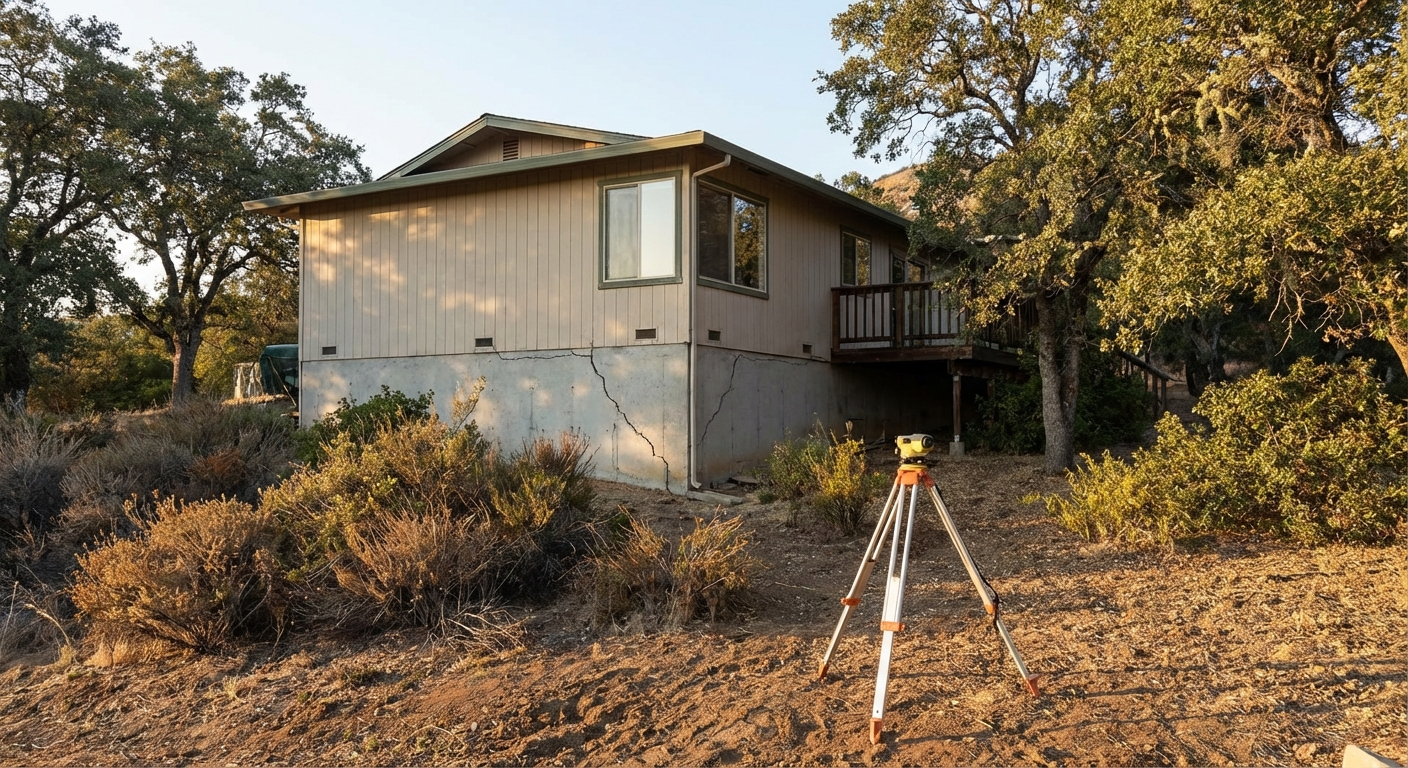
Insurers aren’t in the business of covering things that are preventable or just happen over time. Your policy isn’t a home warranty. So, if your foundation cracks because your house is old, or because it’s simply settling over decades, or because you haven’t maintained proper drainage around your home — those are typically on you.
It’s a big difference between a sudden, catastrophic event, like a tree falling on your house and cracking the foundation, and the slow, insidious damage from years of neglect or natural aging. Insurers draw a very clear line between the two.
When Your Policy *Might* Step In
Despite all those exclusions, there are scenarios where your standard policy *could* offer some relief.
Imagine a pipe bursts under your slab foundation, flooding the area and causing significant structural damage. A burst pipe is usually a covered peril. So, the damage from the water — including to the foundation — would likely be covered. That’s a good outcome.
But wait — if that pipe was leaking slowly for years, and you didn’t know about it, causing gradual damage? That might be considered “wear and tear” or “neglect” and could be denied. It really depends on the specifics, the policy language, and how quickly the damage manifested.
Sometimes, if damage is caused by a third party — say, a careless construction crew next door undermines your foundation — your insurer might pay out and then pursue the responsible party to recover their costs. That’s called subrogation, and it’s how insurers try to recoup money when someone else is at fault.
The California FAIR Plan and Foundation Woes
Many homeowners in California, especially those in high-risk wildfire areas, have found themselves pushed into the California FAIR Plan. This is California’s “insurer of last resort,” designed to provide basic fire coverage when traditional insurers won’t.
It’s a safety net, but it’s a pretty thin one when it comes to foundation damage. The FAIR Plan primarily covers fire, wildfire, smoke, and some other limited perils. It definitely doesn’t cover earth movement, settling, or most of the common causes of foundation damage. If you’re on the FAIR Plan, you’ll need to look for supplemental policies, often called “Difference in Conditions” policies, to get broader coverage, but even those usually exclude earth movement.
Why California’s Insurance Market Feels So Shaky Right Now
It’s not just your foundation that feels shaky; the entire insurance market in California is feeling it. We’ve seen devastating wildfires tear through communities from the Sierra foothills to the hills of Orange County. Construction costs have skyrocketed, making repairs far more expensive. Premiums jumped 40% between 2022 and 2024 for many homeowners, and some major players like State Farm and Allstate have significantly limited new policies or even pulled back from the state entirely.
This isn’t just about wildfires, though. It’s about a combination of factors: rising claims costs, the increasing frequency of severe weather events, and the state’s regulatory environment (Prop 103, for instance, which limits how quickly insurers can raise rates). All this makes finding comprehensive coverage for your home, especially for something as complex as foundation issues, harder than ever.
What Homeowners Can Do to Protect Their Foundation — And Their Policy
You can’t control earthquakes, but you can control a lot of other things. Being proactive is your best defense.
First, regular inspections. Get a professional to look at your foundation every few years. They can spot small cracks or drainage issues before they become huge, expensive problems.
Second, manage your drainage. Make sure rainwater flows away from your house, not towards it. Gutters should be clear, downspouts extended. Poor drainage is a huge contributor to soil expansion and contraction, especially in areas with clay soils.
Third, be smart about landscaping. Tree roots can be incredibly powerful, growing under and through foundations, causing lift and cracks. Plant trees and large shrubs a safe distance from your home.
Taking these steps not only protects your biggest investment but also shows your insurer you’re a responsible homeowner. That can sometimes make a difference when it comes to claims.
Finding the Right Help: An Independent Agent Makes a Difference
Navigating the complexities of home insurance in California, especially with something as specific as foundation damage, isn’t a DIY project. Policy language is dense. Exclusions are subtle. And the market is constantly changing.
This is where an independent insurance agent becomes invaluable. Someone like Karl Susman, with California Home Insurance Agency (CA License #OB75129), doesn’t work for just one company. He works for you. He can shop around, compare policies from different insurers — if they’re even writing in your area — and explain the fine print. He understands the California market and can help you figure out what’s covered, what’s not, and what options might exist for specialized coverage.
Don’t guess when it comes to your home’s foundation. Get expert advice. You can start by getting a personalized quote and discussing your specific needs.
Get Your Home Insurance Quote Now
A Quick Word on Policy Language and Deductibles
Always read your policy. Yes, it’s boring. Yes, it’s long. But it’s the contract that dictates what happens when something goes wrong. Pay close attention to the “Exclusions” section, especially anything related to “earth movement,” “settling,” “wear and tear,” or “latent defects.”
Also, remember deductibles. Foundation repairs can easily run into the tens or hundreds of thousands of dollars. Even if damage is covered, your deductible will apply. Some policies have flat deductibles ($1,000, $2,500), while others have percentage deductibles for certain perils, like wind or hail — or earthquakes, which can be 10-20% of your dwelling coverage. That’s a huge out-of-pocket cost.
Understanding these details *before* a problem arises is always better than finding out the hard way. A good agent can walk you through it.
Ready to understand your options better?
Get a Customized Home Insurance Quote
Frequently Asked Questions About California Home Insurance and Foundation Damage
Does my standard policy cover cracks in the foundation?
The short answer is yes. The real answer is more complicated. If those cracks are caused by a sudden, covered peril like a fire or a burst pipe, then yes, your policy likely would. But if they’re from normal settling, expansive soils, or long-term issues like poor drainage, then probably not. Most standard policies exclude “earth movement” and “wear and tear.”
What if a tree root from my neighbor’s property damages my foundation?
This is a tricky one. Generally, your own policy might cover it if it’s considered a “sudden and accidental” event, though some policies might exclude damage from tree roots entirely. You might also have a claim against your neighbor’s liability insurance, but proving fault and getting them to pay can be a long process. It’s best to talk to your agent about specific scenarios like this.
Is it better to get foundation damage repaired immediately or wait?
Always address foundation damage as soon as you notice it. Small cracks can become big problems quickly, and delaying repairs can lead to more extensive — and more expensive — damage down the line. Plus, if you wait, your insurer might argue that the damage worsened due to your neglect, potentially affecting any claim you might make.
Can I get earthquake insurance to cover foundation damage?
Yes, earthquake insurance (purchased separately from your standard home policy) is designed to cover damage from seismic activity, including to your foundation. However, these policies often come with high deductibles — sometimes 10% to 20% of your dwelling coverage — so you’ll still be responsible for a significant portion of the repair costs.
This article is for informational purposes only and does not constitute financial advice.