
The Shifting Sands of California Homeowners Insurance Renewals
For most California homeowners, that annual insurance renewal notice used to be a pretty straightforward affair. You’d get the bill, maybe a slight bump in price, and you’d pay it. Not anymore. The landscape has changed dramatically, and understanding what to expect when your policy comes up for renewal isn’t just a good idea; it’s essential.
Why the sudden shift? A few big reasons. Wildfires, of course, are a huge factor. The sheer scale of destruction in places like Paradise or the Santa Cruz Mountains has forced insurers to rethink their risk models. But it’s not just fires. Skyrocketing construction costs mean rebuilding a home after any disaster—earthquake, flood, or fire—is far more expensive than it used to be. We’re talking materials, labor, permits. Premiums jumped 40% between 2022 and 2024 for many homeowners, and some folks in high-risk areas saw even bigger increases or outright non-renewals.
Understanding Your Renewal Notice
You won’t get ambushed. State law requires your insurer to give you fair warning. If they’re renewing your policy but changing the terms or raising the premium, they have to send you a notice at least 30 days before your current policy expires. If they decide not to renew your policy at all—a “non-renewal”—they need to give you a longer heads-up, typically 75 days.
This notice isn’t just a bill. It’s a critical document. It spells out your new premium, any changes to your coverage, and sometimes, the reasons behind those changes. Don’t just glance at the new number. Read the fine print. Did your deductible go up? Did they reduce coverage for certain perils? Sometimes, insurers will offer a renewal but with significantly less coverage, which isn’t really a renewal at all, is it? It’s a whole new policy in disguise.

What Drives Up Your Renewal Premium?
Several things can send your premium soaring at renewal time.
* **Your Home’s Location:** This is probably the biggest one. If your home is in a designated high-wildfire-risk area—think parts of Ventura County, the foothills of the Sierra Nevada, or even pockets of the Inland Empire—you’re going to feel it. Insurers are using more sophisticated mapping and modeling to assess fire risk, and those maps are constantly updated.
* **Inflation and Rebuilding Costs:** This affects everyone. Lumber, concrete, skilled labor—it all costs more. Your insurer needs to make sure your coverage amount (dwelling coverage) is enough to rebuild your home from the ground up. If that cost goes up, your premium usually follows.
* **Claims History:** Made a claim recently? Even a small one can impact your renewal rate. Multiple claims, even minor ones, can make you look like a higher risk.
* **The Insurer’s Overall Financial Health:** This is a bit opaque to the average homeowner, but it matters. If an insurer has paid out a lot in claims across the state due to major disasters, they’ll often try to recoup those losses by raising rates across their entire book of business.
* **Credit Score:** Some insurers still use credit-based insurance scores in California, though the use of these scores has been restricted for new policies in some cases. A dip in your credit score could potentially affect your renewal rate.
When Your Insurer Says “No Thanks”: Non-Renewals
This is the scenario no one wants. You open that envelope, and it’s not a bill; it’s a non-renewal notice. It happens. Major insurers like State Farm and Farmers have pulled back from writing new policies in California, and some are quietly non-renewing existing customers, especially in fire-prone areas.
If you get one of these notices, don’t panic. You have options. The first step is to understand *why* they’re non-renewing you. Sometimes it’s a specific risk factor with your home, like an unmaintained roof or brush too close to the structure. Other times, it’s a broader decision by the company to reduce their exposure in your entire zip code.
Here’s where it gets interesting. You absolutely need to start shopping around immediately. Don’t wait until the last minute. This isn’t like finding a new car insurance policy; it can take time, especially if your home is considered high-risk.
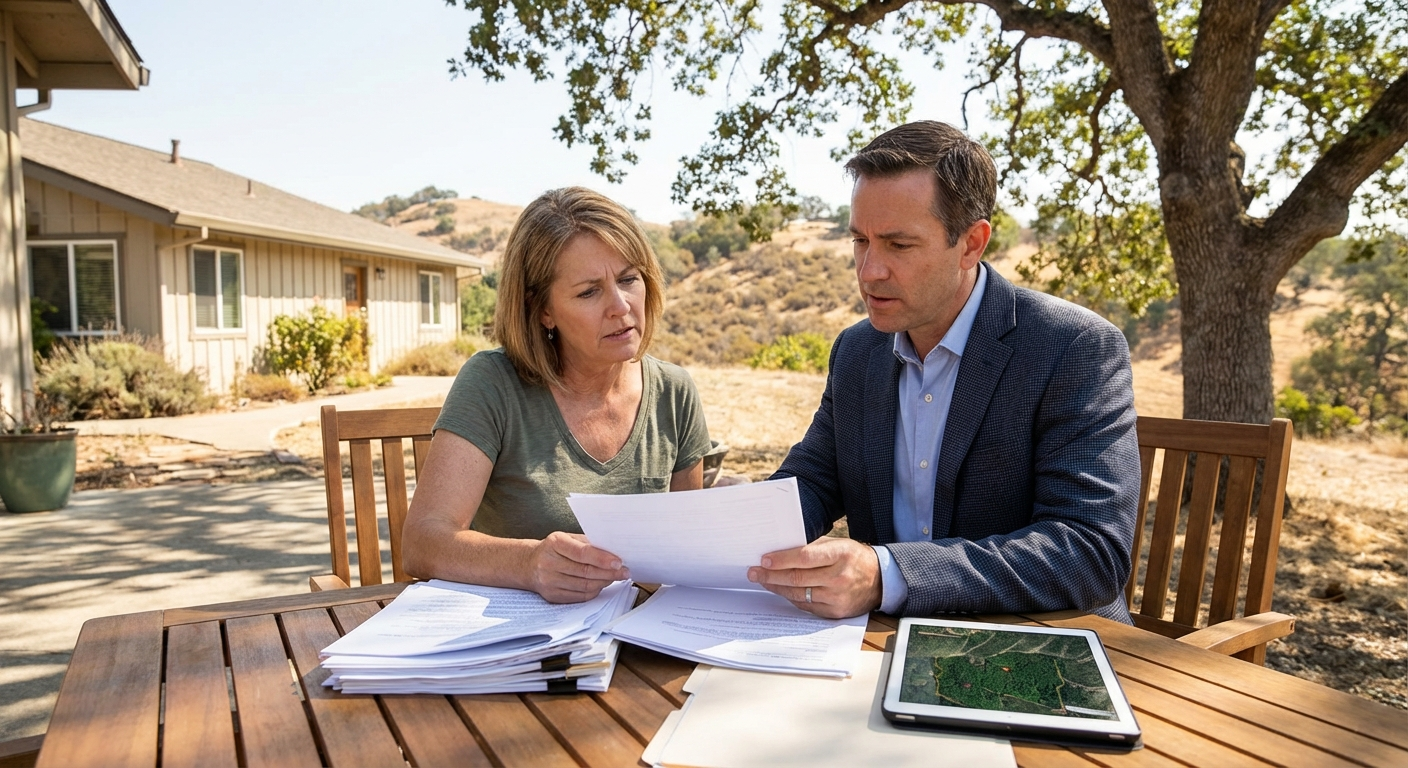
The FAIR Plan: A Last Resort, Not a First Choice
If you’ve exhausted all your options with traditional insurers, you might end up looking at the California FAIR Plan. This isn’t a private insurance company. It’s an association of all insurers licensed to do business in California, designed to provide basic fire insurance coverage to properties that can’t get it anywhere else.
But wait—it’s important to understand what the FAIR Plan *is* and *isn’t*. It covers fire, lightning, internal explosion, and smoke. That’s it. It doesn’t cover liability, theft, water damage, or most of the other things a standard homeowners policy protects you from. For that, you’ll need to buy a “Difference In Conditions” (DIC) policy from a separate private insurer to pair with your FAIR Plan policy. It’s a two-policy solution, often more expensive, and definitely more complicated.
Preparing for Your Next Renewal
You don’t have to be a passive observer in this process. There are things you can do to make your home more attractive to insurers and potentially keep your rates lower.
* **Review Your Policy Annually:** Don’t just wait for the renewal notice. Pull out your policy documents once a year. Understand your coverage limits, deductibles, and any endorsements. Are you over-insured or under-insured? Has the value of your personal property changed significantly?
* **Home Hardening:** This is huge, especially in wildfire zones. Clearing brush, installing ember-resistant vents, upgrading to a fire-resistant roof—these actions can make a real difference. Some insurers offer discounts for these improvements, and more importantly, they might be the difference between getting a policy and being non-renewed.
* **Maintain Your Home:** A well-maintained home signals lower risk. Fix that leaky faucet. Repair the loose siding. Keep your trees trimmed away from your roof.
* **Shop Around:** This is probably the single most effective thing you can do. Don’t just blindly renew with your current carrier, especially if your premium jumped. Get quotes from multiple companies. You might be surprised at the difference.
Which brings up something most people miss. Shopping around isn’t always easy. Each insurer has different underwriting rules, and what one company considers high-risk, another might be willing to cover at a reasonable rate. This is where an independent insurance agent comes in.
The Value of an Independent Agent Like Karl Susman
Trying to get quotes from a dozen different companies on your own? Good luck. It’s a time-consuming, sometimes frustrating process. An independent agent, like Karl Susman of California Home Insurance Agency, doesn’t work for one specific insurance company. Instead, he works with many different carriers. This means he can shop the market for you, comparing policies and prices to find the best fit for your specific needs and risk profile.
Honestly, in today’s California insurance market, an independent agent isn’t just a convenience; they’re often a necessity. They know the ins and outs of the market, which companies are still writing in certain areas, and how to present your home in the best light to underwriters. They can explain the nuances of Proposition 103, which regulates insurance rates in California, and how it impacts your policy.
You might be thinking, “Can’t I just do this myself online?” The short answer is yes. The real answer is more complicated. Online quotes often don’t tell the whole story, especially for California homes with unique risks. An agent can explain why one policy might look cheaper but leave you exposed in a critical area.
For personalized guidance on your homeowners insurance renewal, or to explore your options if you’ve received a non-renewal notice, you can reach Karl Susman at California Home Insurance Agency, CA License #OB75129, by calling (877) 411-5200. Or, if you’re ready to get started now, you can request a quote online.
Get Your California Home Insurance Quote Here
Don’t wait for that non-renewal notice to hit your mailbox. Be proactive. The sooner you start exploring your options, the better positioned you’ll be to secure the coverage your home needs.
FAQs About California Homeowners Insurance Renewals
What’s the typical notice period for a non-renewal in California?
If your insurer decides not to renew your homeowners policy, they are generally required to give you at least 75 days’ notice before your current policy expires. For policy changes or premium increases at renewal, it’s typically 30 days.
Can my insurance company non-renew me just because I live in a high-fire-risk area?
Yes, they can. Insurers are assessing their risk exposure in wildfire-prone areas more aggressively than ever. If your home is in an area they deem too risky, or if they’re reducing their overall exposure in California, they can choose not to renew your policy. This isn’t personal; it’s a business decision based on their risk models.
If I get a non-renewal, will my next policy be more expensive?
Often, yes. Being non-renewed can signal higher risk to other insurers. However, it’s not a guarantee. An independent agent can help you find companies that might view your specific situation differently. You might also find that pairing a FAIR Plan policy with a Difference In Conditions policy is your only option, and that combined cost can be higher.
What if I’ve made home hardening improvements? Do I need to tell my insurer?
Absolutely. You should always inform your insurer of significant home improvements, especially those related to fire safety or structural integrity. Many companies offer discounts for things like ember-resistant vents, fire-resistant roofing, or defensible space improvements. These efforts not only protect your home but can also make you a more attractive customer at renewal time.
Is it true that some insurers are pulling out of California?
Yes, several major insurers, including State Farm and Allstate, have announced they are no longer writing new homeowners policies in California. This doesn’t necessarily mean they’re leaving the state entirely, but it does make finding new coverage more challenging for many homeowners. This is another reason why working with an independent agent is so important, as they have access to a wider range of carriers.
Ready to explore your renewal options? Get a personalized quote today.
This article is for informational purposes only and does not constitute financial advice.