
What You’ll Learn:
California homeowners face unique challenges, especially those living in areas prone to wildfires. This guide will walk you through understanding fire zones, the current insurance market crunch, your options if traditional coverage becomes scarce, and practical steps you can take to protect your home and secure adequate insurance. We’ll cover everything from how fire zones are designated to the ins and outs of the California FAIR Plan.
1. Understanding California’s Wildfire Reality
California’s beauty often comes with a fiery downside. For years now, the state has grappled with increasingly destructive wildfires. Think back to the Dixie Fire or the Camp Fire – massive blazes that wiped out entire communities, leaving behind billions in damages. It’s not just remote forests anymore; fires are creeping into suburban areas, threatening homes in places like the hills of Ventura County, the brushy canyons of the Inland Empire, or even parts of the Santa Clarita Valley.
This isn’t some abstract problem. It’s a very real, very personal threat for hundreds of thousands of homeowners. The fire season seems to stretch longer, fueled by hotter, drier conditions and years of drought. Scientists point to climate change, sure, but there’s also the simple fact that more people are building homes closer to wildlands – what we call the Wildland Urban Interface, or WUI. That’s a big problem for insurers, and it’s why getting homeowners insurance in California fire zones has become such a headache.

2. Pinpointing Your Home in a Fire Hazard Zone
So, how do you know if your home is in one of these zones? The short answer is yes, you probably are if you’re asking. The real answer is more complicated, because “fire zone” isn’t just one thing. Various agencies map fire risk, and insurers use their own models too.
The California Department of Forestry and Fire Protection, or CAL FIRE, is a major player. They classify areas into different Fire Hazard Severity Zones (FHSZ): Moderate, High, and Very High. These zones consider things like vegetation, slope, and potential for wildfire. You can actually look up your address on their website to see your general CAL FIRE designation. It’s a good starting point.
But here’s the thing. Insurers don’t just use CAL FIRE maps. They’ve got their own sophisticated algorithms, pulling in data from satellite imagery, historical fire patterns, topography, even the type of roof your neighbor has. They’ll look at how close you are to brush, the steepness of your driveway, if there’s a fire hydrant nearby. All these factors create a unique risk profile for your specific property. Two houses across the street from each other could have wildly different risk assessments, simply because one has a defensible space around it and the other doesn’t.
3. Why Insurers Are Pulling Back (The Market Reality)
This is where things get tough for California homeowners. For years, insurers absorbed the rising costs of wildfire claims. But after a string of catastrophic fire seasons – think billions and billions in payouts – many companies just can’t make it work anymore. They’re losing money. A lot of it.
That’s why you’ve seen major carriers like State Farm, Allstate, and others announce they’re no longer writing new policies in certain high-risk areas. Some are non-renewing existing policies. Others are simply raising premiums drastically – sometimes 40% or more between 2022 and 2024. It’s not because they don’t like you; it’s pure economics. They have to manage their risk and stay financially solvent. They’re also dealing with reinsurance costs that have skyrocketed. Reinsurance is basically insurance for insurance companies, and if those costs go up, so do yours.
This market shift means fewer choices for homeowners. It means higher prices. And it means more people are struggling to find any coverage at all in the traditional market. It’s a frustrating situation, to say the least, and it hits hardest in places like Paradise, Malibu, or the foothills of the Sierra Nevada.
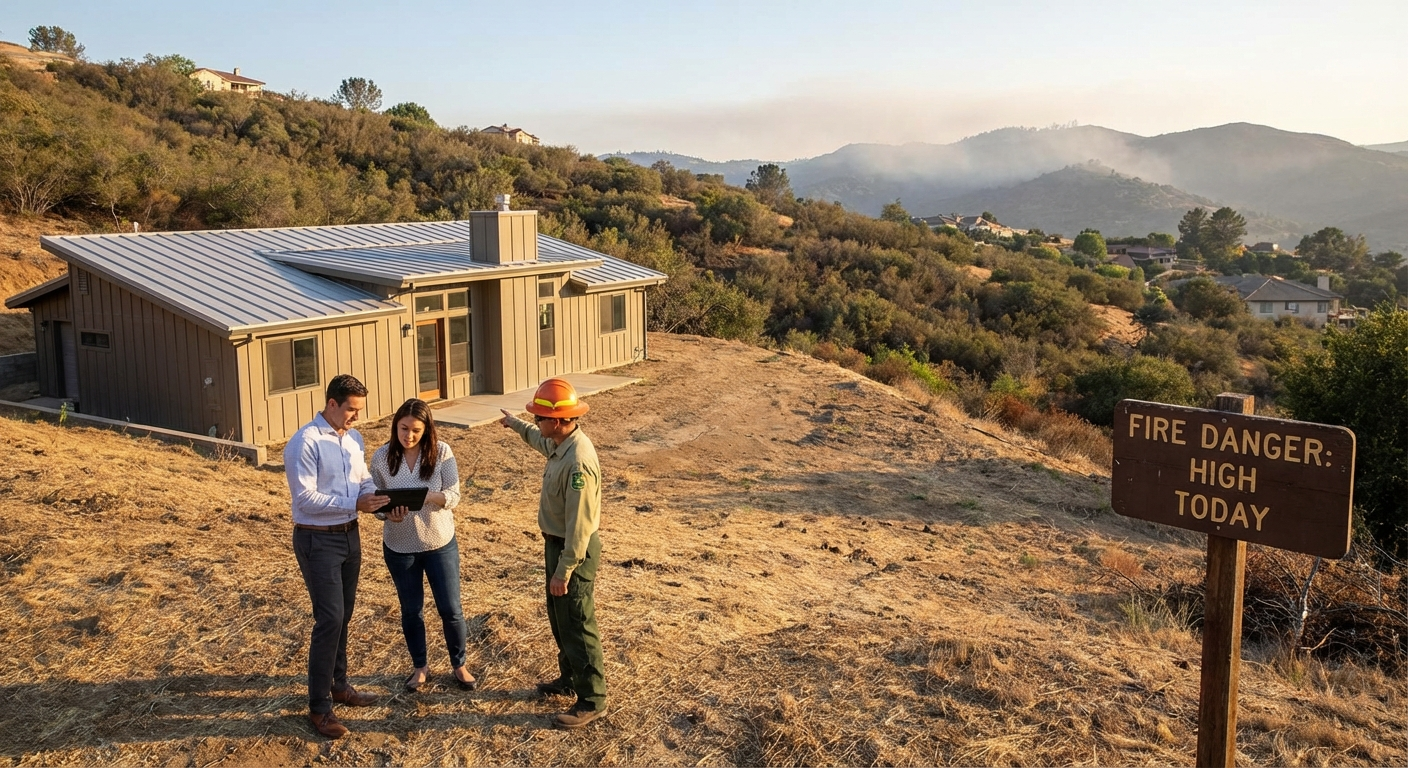
4. Your Options When Standard Insurance Isn’t Enough: The FAIR Plan
If you’ve been dropped by your insurer or can’t find a policy in the voluntary market, don’t panic. California has a safety net: the California FAIR Plan. FAIR stands for “Fair Access to Insurance Requirements.” It’s not a government program, exactly. It’s an association of all licensed property insurers in California, created by state law (specifically, the Lanterman-Petris-Short Act of 1968, which was later influenced by Proposition 103). Basically, if you own property in California, you’re entitled to basic fire insurance through the FAIR Plan if you can’t get it anywhere else.
But wait — there are some important things to know about the FAIR Plan. It’s designed to be a last resort, not a first choice. It provides coverage for fire and other perils like smoke, explosion, and lightning. However, it’s a “bare bones” policy. It won’t cover things like liability, theft, water damage, or personal property beyond very basic limits – the stuff a standard homeowners policy usually includes. Because of this, most people who get a FAIR Plan policy also need to buy a “Difference in Conditions” (DIC) policy from another insurer. This DIC policy fills in the gaps, providing coverage for those other perils and liability.
Is it ideal? No. It often means two separate policies, two separate bills, and usually a higher overall cost than a traditional homeowners policy. But it’s better than nothing, right? It ensures you have at least some protection against wildfire, which is what we’re really worried about in these high-risk areas.
Ready to explore your options, even if you think you’re in a tough fire zone? Karl Susman and the team at California Home Insurance Agency can help you understand the FAIR Plan and DIC policies. Get a quote today!
5. Making Your Home More Insurable: Mitigation Efforts
You might feel helpless, but you’re not. Home hardening and creating defensible space are your absolute best defenses against wildfire. They also make your home a much more attractive risk to insurers. The state is actually pushing for this, with new regulations coming down the pike that will require insurers to consider mitigation efforts when setting premiums.
What does “mitigation” mean? It’s all about making your home less vulnerable to embers and direct flame contact. Here are some key steps:
- Defensible Space: Clear vegetation at least 100 feet from your home. Remove dead plants, leaves, and pine needles. Trim low-hanging branches. This creates a buffer zone.
- Roofing: Upgrade to fire-resistant roofing materials like tile, metal, or asphalt composition shingles. Embers are a huge problem; they can travel for miles and ignite a vulnerable roof.
- Vents: Install 1/8-inch metal mesh screens over all attic, foundation, and dryer vents to prevent embers from entering your home.
- Windows: Consider multi-pane windows with tempered glass, which are more resistant to heat and shattering.
- Siding: Opt for fire-resistant siding materials like stucco, fiber cement, or treated wood.
- Decks & Fences: Use fire-resistant materials for decks and fences, especially those attached to your home. Keep the area under decks clear of debris.
These aren’t cheap fixes, but they’re investments. Not only do they protect your property, but they’re increasingly becoming factors that insurers will look at favorably. The California Department of Insurance is working on new regulations, set to kick in around 2025, that will specifically require insurers to factor in your mitigation efforts. That’s a big deal. It means you might actually see a discount for doing the right thing.
6. Shopping for Coverage: What to Ask and Look For
Even in a tough market, it pays to shop around. Don’t just accept the first quote, especially if you’re in a fire zone. Here’s what you should be asking and looking for:
- Replacement Cost vs. Actual Cash Value: Always, always get replacement cost coverage for your dwelling and personal property. Actual cash value only pays for the depreciated value of your items, which won’t be enough to rebuild or replace.
- Extended Replacement Cost: This is a must-have in California. It provides an extra percentage of coverage (e.g., 20% or 50%) above your dwelling limit. Building costs can skyrocket after a major disaster, and this buffer could save you from being underinsured.
- Building Code Upgrades: After a fire, you might have to rebuild to newer, stricter building codes. Make sure your policy covers these increased costs.
- Loss of Use/Additional Living Expenses (ALE): If you’re displaced by a fire, this coverage pays for temporary housing, food, and other living expenses. Make sure the limits are sufficient – a year or more of coverage isn’t uncommon.
- Deductibles: Fire deductibles can be different from other perils. Some policies have a percentage deductible (e.g., 5% of your dwelling coverage) specifically for fire. Understand how this works.
- Policy Exclusions: Read the fine print. Are there any specific fire-related exclusions? What about smoke damage?
Don’t be afraid to ask questions. A good agent will walk you through every line item. You’re paying for peace of mind, after all.
7. Working with an Independent Agent
This is where an independent insurance agent truly shines. While captive agents work for one specific company (like State Farm or Farmers), independent agents work for you. They have access to multiple insurance carriers, including smaller, regional ones that might still be writing policies in fire zones. They can compare quotes, explain the nuances of different policies, and even help you navigate the FAIR Plan if it comes to that.
An experienced independent agent like Karl Susman of California Home Insurance Agency (CA License #OB75129) understands the complexities of the California market. They know which carriers are still open for business in certain areas and what mitigation efforts might make a difference in your eligibility or premium. They can be your advocate, helping you find the best possible coverage at the best possible price, even when options feel limited.
Don’t go it alone. The market is too tricky right now. A knowledgeable agent can save you time, money, and a whole lot of stress.
Ready to talk to an expert about your home insurance in a California fire zone? Contact Karl Susman at California Home Insurance Agency, CA License #OB75129, at (877) 411-5200 or request a quote online.
Frequently Asked Questions
Q: What if I can’t find any insurance at all, even through the FAIR Plan?
A: The FAIR Plan is designed to be a market of last resort, meaning it should be available to any homeowner who can’t get coverage in the traditional market. If you’re having trouble even with the FAIR Plan, it’s usually because you haven’t completed the necessary steps or an agent isn’t familiar with the process. An independent agent can definitely help you apply and secure a FAIR Plan policy, along with a complementary Difference in Conditions (DIC) policy.
Q: Will making my home fire-resistant actually lower my premium?
A: Historically, not always directly, but that’s changing. The California Department of Insurance is implementing new regulations that will require insurers to offer discounts for home hardening and defensible space starting in 2025. So, while it’s always been the best way to protect your home, soon it will also directly impact your insurance costs. Keep records of all your mitigation efforts!
Q: Are fire zones changing?
A: Yes, constantly. CAL FIRE updates its maps periodically, and insurers’ internal models are always evolving based on new data, climate patterns, and development. What was considered a moderate risk five years ago might be high risk today. It’s why staying informed and working with an agent who understands these shifts is so important.
Q: Is fire insurance separate from homeowners insurance?
A: Not usually. Standard homeowners insurance policies include fire as one of the covered perils. However, in high-risk California fire zones, you might end up with two separate policies: a basic fire-only policy from the FAIR Plan and a “Difference in Conditions” policy from a traditional insurer that covers everything else (liability, theft, water damage, etc.). So, while fire is typically part of a standard HOI, it can become a standalone component out of necessity here.
This article is for informational purposes only and does not constitute financial advice.