
My Roof Is Old. Will My Insurance Still Cover Damage?
Here’s a common worry for California homeowners: You’ve got an older roof, maybe 15 or 20 years on it. A big storm rolls through, or a tree branch falls. You think, “My home insurance will cover this, right?”
The short answer is yes, probably. The real answer is much more complicated. Many people assume an old roof is automatically a deal-breaker for insurance claims. That’s not always true.
What *is* true is that insurers are getting pickier, especially here in California. A roof’s age and condition play a huge role in their willingness to insure your home at all, and certainly in how much they’ll pay if something goes wrong. If your roof is past its typical lifespan — say, asphalt shingles over 20 years old, or a tile roof showing significant wear — you might find it harder to get standard coverage. Some companies might even refuse to renew your policy until you replace it.
What’s the Difference Between “Actual Cash Value” and “Replacement Cost”?
This is where your policy details really matter. Most home insurance policies offer one of two ways to pay for roof damage:
* **Actual Cash Value (ACV):** This means the insurer pays for the cost of a new roof, *minus depreciation*. Think of it like buying a used car. A 15-year-old roof isn’t worth what a brand new one is. If your policy is ACV, and your roof is old, you could get a check that’s only a fraction of what it costs to actually put a new roof on your house. It’s a nasty surprise for many.
* **Replacement Cost Value (RCV):** This is the gold standard. With RCV, your insurer pays the full cost to repair or replace your roof with similar materials, without deducting for depreciation. You might get an initial payment based on ACV, and then the rest once the work is done and you’ve submitted receipts. This is what most homeowners *think* they have.
Many policies for older roofs, or homes in high-risk areas like parts of the Santa Monica Mountains or the Sierra foothills, are now written with ACV coverage for the roof, even if the rest of the dwelling is RCV. It’s a way for insurers to limit their exposure. Always check your declarations page. If you’re unsure, call your agent. Karl Susman at California Home Insurance Agency, CA License #OB75129, can walk you through the fine print. You can reach him at (877) 411-5200.

What Kinds of Roof Damage Does Home Insurance Actually Pay For?
Most people think, “If my roof gets damaged, my insurance pays.” Simple, right? Not quite. Your home insurance policy covers damage caused by “named perils.” These are specific events listed in your policy.
Generally, standard policies will cover roof damage from:
* **Fire and lightning:** A big concern across California, from the Valley to Orange County. If a wildfire scorches your roof, or lightning strikes it, you’re usually covered.
* **Windstorms and hail:** While hail isn’t as common in California as in, say, the Midwest, it does happen. Strong Santa Ana winds or Pacific storms can rip off shingles or cause structural damage.
* **Falling objects:** This is often trees or tree branches falling during a storm. A huge oak limb crashing onto your roof in Ventura County? Covered.
* **Weight of ice or snow:** Less common in most populated parts of California, but certainly a factor for homes up in the mountains.
* **Vandalism:** If someone intentionally damages your roof.
But here’s the thing. Your policy *won’t* pay for everything.
What Doesn’t Get Covered?
This is where many claims run into trouble. Home insurance is designed for sudden, accidental damage. It’s not a maintenance plan.
* **Wear and Tear:** An old roof simply deteriorating from age and weather? Not covered. If your shingles are curling, cracking, or losing granules just because they’re old, that’s on you.
* **Lack of Maintenance:** If you let leaves pile up, causing rot, or don’t fix a small leak that turns into a huge problem, the insurer might deny the claim, arguing it was preventable.
* **Mold or Rot from Long-Term Leaks:** If a leak has been going on for months or years, causing extensive mold or wood rot, your insurer might only cover the *initial* cause of the leak (if it was a covered peril), but not the secondary damage that resulted from your failure to address it promptly.
* **Earthquakes:** Shaking can absolutely destroy a roof. But earthquake damage is *never* covered by a standard home insurance policy. You need a separate earthquake policy for that.
* **Flooding:** If a river overflows its banks and floods your home, damaging the roof from the inside, that’s flood damage. Again, a separate flood insurance policy is required.
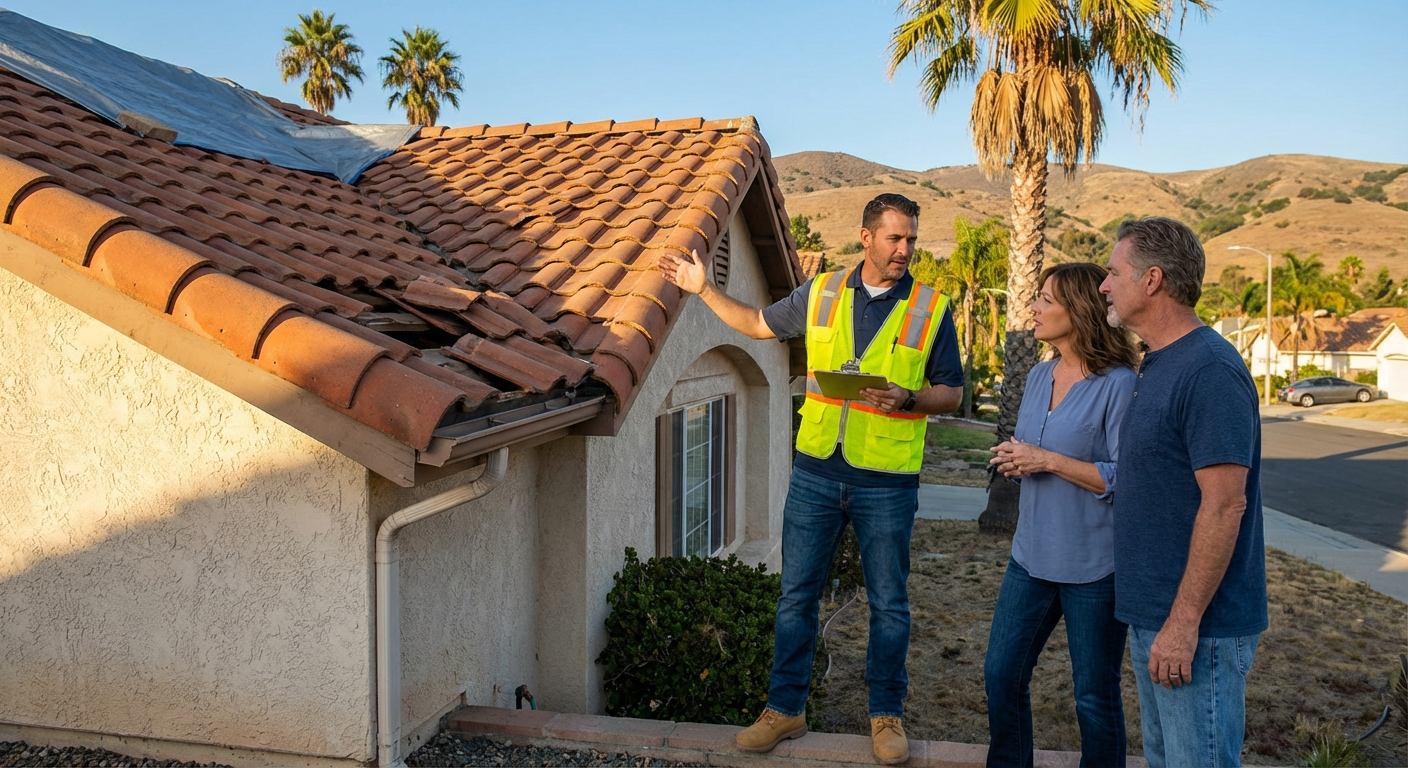
My Insurer Dropped Me Because of My Roof. Now What?
It’s not just a rumor. This is a very real problem for many California homeowners. Major insurers like State Farm, AAA, and Farmers have pulled back or stopped writing new policies in certain areas, citing increased wildfire risk and rising repair costs. Even if they don’t drop you entirely, they might refuse to renew your policy if your roof is deemed too old or not up to current fire-resistant standards.
If you get a non-renewal notice, don’t panic, but act fast.
Your first step should be to call an independent agent. They work with multiple companies and can often find options that aren’t available directly to the public. Sometimes, they can even convince your current insurer to reverse the decision if you agree to make specific upgrades, like replacing your roof with fire-resistant materials.
But wait — what if you can’t find *any* private insurer?
The California FAIR Plan: Your Last Resort (and What You Need to Know)
The California FAIR Plan is an “insurer of last resort.” It’s there for homeowners who can’t get coverage in the traditional market. It will offer basic coverage, but it’s not a full-service policy.
Here’s the catch: a FAIR Plan policy usually *only* covers fire, lightning, and some other limited perils. It *won’t* cover things like wind damage, theft, or liability. So, while it protects your roof from a wildfire — a huge concern in places like Malibu or the Inland Empire foothills — it won’t help if a tree falls on it during a winter storm.
To get comprehensive coverage, you’ll need to purchase a separate “Difference in Conditions” (DIC) policy from a private insurer. This DIC policy fills the gaps, covering perils like wind, theft, and liability. So, you end up with two policies to cover what a single standard policy used to. It’s more complicated, often more expensive, and something many homeowners are facing today.
How Does Filing a Roof Claim Impact My Premiums?
This is a question everyone asks, and it’s a tricky one. Many people think, “That’s why I have insurance, right? To file claims!” And yes, absolutely. But insurers don’t see claims the same way you do.
Filing a claim, especially for roof damage, can absolutely impact your premiums. Insurers track your claims history. If you’ve filed multiple claims in a short period, or even one significant claim, you might see your rates go up at renewal time. In some cases, it could even lead to a non-renewal, particularly if your roof was already considered marginal.
It’s a tough balance. You pay for the coverage, so you should use it when you need it. But you also need to weigh the cost of the repair against your deductible and the potential increase in your future premiums.
For instance, if you have a $2,500 deductible and the roof repair is only $3,000, filing a claim might not be worth it. You’d pay $2,500 anyway, and then risk higher premiums for years. If the damage is extensive — say, $25,000 or more — then filing a claim makes much more sense.
Premiums for California homeowners have seen significant increases recently, with many seeing jumps of 30-50% or more between 2022 and 2024. Filing a claim can add another layer to that rising cost.
The Claim Process: What to Expect and How to Avoid Headaches
So, your roof is damaged, and you’ve decided to file a claim. What happens next? Many people expect a quick, easy process. It’s rarely that simple.
1. **Document Everything:** Take photos and videos of the damage *before* you do anything else. If it’s safe, get up close. Note the date and time. This is your evidence.
2. **Make Temporary Repairs:** Your policy usually requires you to prevent further damage. Cover holes with tarps. Get a professional to do this if it’s unsafe for you. Keep all receipts for these temporary repairs.
3. **Contact Your Insurer:** File the claim as soon as reasonably possible. They’ll give you a claim number.
4. **The Adjuster Visit:** Your insurer will send an adjuster to inspect the damage. They’ll assess the cause, extent, and estimated cost of repairs. They might even get on the roof themselves.
5. **Get Your Own Estimates:** This is a big one. Don’t just rely on the adjuster’s estimate. Get at least two, preferably three, independent quotes from reputable, licensed roofing contractors. Their estimates might be higher than the adjuster’s, which gives you room to negotiate. Make sure the quotes detail the scope of work and materials.
6. **Review the Settlement:** Your insurer will send you a settlement offer based on the adjuster’s report. Compare it with your contractor quotes. If there’s a big difference, you’ll need to discuss it.
Which brings up something most people miss. Don’t feel pressured to accept the first offer. It’s a negotiation. If you’re struggling, or feel your claim is being unfairly denied or undervalued, that’s when you might want to bring in a public adjuster or an attorney.
Dealing with roof damage and insurance claims can be a huge headache, especially with the complexities of the California market. Sometimes, you just need an expert on your side to help you understand your options and secure the coverage you need.
If you’re facing a tough situation with a roof claim or just want to make sure your home is properly protected, it pays to talk to someone who understands the California insurance landscape. For a free, no-obligation quote and expert advice, click here: Get a California Home Insurance Quote.
Is There Anything I Can Do to Keep My Roof Insurance Affordable?
With premiums climbing across California, many homeowners feel helpless. While you can’t control the market, you can take steps to make your home more appealing to insurers and potentially lower your costs.
* **Maintain Your Roof:** This is the simplest, most effective step. Regular inspections (at least once a year), clearing debris, cleaning gutters, and making small repairs promptly can extend your roof’s life and prevent larger, more expensive claims.
* **Upgrade to Fire-Resistant Materials:** If you’re replacing your roof, choose fire-resistant materials. Class A rated roofs (like concrete tile, metal, or certain asphalt shingles) can make a big difference, especially in high-fire-risk areas like the foothills of the San Gabriel Mountains or parts of Sonoma County. Insurers love to see this.
* **Reinforce Your Home Against Wind:** While less common than fire, wind damage is a real threat. Ensuring your roof is properly strapped and sealed can help.
* **Shop Around, Every Year:** Don’t just renew with your current insurer without checking prices. The market changes constantly. What was a good deal last year might not be this year. An independent agent like Karl Susman at California Home Insurance Agency (CA License #OB75129) can shop multiple carriers for you, often finding better rates or more comprehensive coverage. Give him a call at (877) 411-5200.
* **Increase Your Deductible (Carefully):** A higher deductible means lower premiums. But remember, you’ll pay that deductible out of pocket if you file a claim. Make sure it’s an amount you can comfortably afford.
Taking a proactive approach to your home’s maintenance and your insurance coverage is the best way to protect your biggest investment in California.
Frequently Asked Questions About California Roof Damage Claims
How long do I have to file a roof damage claim in California?
Generally, you should file a claim as soon as possible after discovering the damage. Most policies state you must notify your insurer “promptly” or “as soon as practicable.” While the legal statute of limitations for property damage in California is two years, waiting too long can lead to issues, especially if the insurer argues the damage worsened due to delay or that it’s hard to determine the exact cause of damage after a long time.
Can my insurance company force me to replace my entire roof if only part of it is damaged?
It depends on the extent of the damage and your policy. If a significant portion of the roof is damaged beyond repair, or if replacing only a section would compromise the roof’s integrity or ability to match existing materials, the insurer might agree to a full replacement. However, if the damage is localized and can be repaired with matching materials, they’ll likely only pay for the damaged section. Building codes in some areas might also require a full replacement if a certain percentage of the roof is damaged.
What if my insurance company denies my roof claim?
If your claim is denied, ask for a written explanation detailing the reasons. Review your policy carefully to understand why they made that decision. If you believe the denial is unfair, you can appeal the decision with your insurer, provide additional evidence (like contractor reports or expert opinions), or file a complaint with the California Department of Insurance. You might also consider consulting with a public adjuster or an attorney specializing in insurance claims.
Do I need to get multiple estimates for roof repair, or can I just use my insurance company’s preferred contractor?
You are absolutely not obligated to use your insurance company’s preferred contractor. In fact, it’s highly recommended to get at least two or three independent estimates from licensed, reputable roofing contractors. This ensures you get a fair price and that all necessary repairs are included. Your insurer might suggest contractors, but the final choice is always yours.
Will my insurance cover the cost of a temporary tarp on my roof after a storm?
Yes, usually. Most policies include coverage for “reasonable” costs incurred to prevent further damage to your property after a covered loss. This includes things like tarps, boards, or other temporary repairs to protect your home from additional rain, wind, or intrusion until permanent repairs can be made. Make sure to keep all receipts for these expenses.
This article is for informational purposes only and does not constitute financial advice.
Ready for Your Free Quote?
No obligation. Takes 2 minutes. Speak with Karl Susman and the team at California Home Insurance Agency.